Rest today detailed how Rest Sensor works in hotel rooms, from the moment the sensor registers a change in air quality to the staff review that comes before a hotel decides on any follow-up. Rest Sensor is a privacy-safe air-quality sensor from Rest, a hospitality technology company, that helps hotels identify smoking and vaping in non-smoking rooms. The details cover what travelers and hotel teams most often want to know about hotel smoking and vaping detectors, including whether hotels can tell if someone vapes in a room, what happens after an alert and how Rest Sensor protects guest privacy.
Blog
How Rest Sensor Detects Smoking and Vaping in Hotel Rooms
Rest Sensor Supports Hotel-Led Review and Enforcement, Consistent Smoke-Free Standards, and a Better Guest Experience
“Rest Sensor alerts hotel teams in real time with time-stamped air-quality data, so they can address lingering smoke or vapor before it settles into furnishings or the next guest checks in,” said Christine Myer, co-founder and VP of Customer Operations & Marketing at Rest. “Staff review that data alongside housekeeping notes and other context, and the hotel makes the final decision on any policy enforcement. The result is that hotels get the clarity to apply their smoke-free policies fairly and protect their property, and guests get the fresh room they booked and the clean, healthy air they expect.”
How Rest Sensor Works
Rest Sensor works as an air-quality monitor and a smoking and vape detector for hotels by continuously tracking the air quality in a guest room. Its proprietary algorithm evaluates multiple environmental indicators to identify air-quality patterns associated with combusted or vaporized tobacco, marijuana and nicotine. When a change in air quality meets defined thresholds, the sensor sends a time-stamped alert to the hotel's secure cloud dashboard showing when conditions changed and how long the event lasted. Trained technicians install each Wi-Fi-connected sensor in under five minutes per room, and the devices need no batteries or cartridge replacements and operate quietly and discreetly.
What Happens After an Alert
An alert is where the hotel's review begins. Hotel staff look at the timing and duration of the event, and the property considers additional context, such as room activity, housekeeping status or nearby environmental factors. The hotel then determines whether any follow-up is necessary based on its own policies and discretion. Rest does not issue charges, contact guests or make enforcement decisions.
The sensor is designed to support a careful review before any decision is made. Rest's Guest Experience page notes that best-practice review steps often include:
- Evaluating the timing and duration of the event
- Considering adjacent rooms or building conditions
- Checking housekeeping or maintenance activity
- Reviewing any guest feedback or additional information
Guests with questions about a specific stay should contact the hotel directly, and most hotels provide an appeal or customer service process so the information can be reassessed. Rest's FAQ covers what the sensor detects, how it is tested and what guests should do if they have questions about a charge.
How Rest Sensor Protects Guest Privacy
Rest Sensor has no camera or microphone. It monitors environmental air quality only, records no audio or video and does not track who is in the room or what they are doing, which lets hotels uphold smoke-free policies while protecting guest privacy. Rest's Technology & Privacy page has more detail on how the sensor protects privacy and supports human-led review.
Why Hotels Use Rest Sensor
Hotels know that guests appreciate a clean room and stay. Travelers choose non-smoking rooms with the expectation of clean air, comfortable surroundings and healthy conditions. Smoke and vapor residue are among the most common causes of guest complaints, and an affected room can need deep cleaning, ozone treatment and replacement linens before it goes back into service. Hotels, casinos, management groups and ownership portfolios use Rest Sensor to keep non-smoking rooms fresh for the next guest, reduce room downtime and remediation costs, and apply smoke-free policies consistently across rooms, teams and shifts.
Rest Sensor: Frequently Asked Questions
What is Rest Sensor?
Rest Sensor is a privacy-safe, Wi-Fi-connected air-quality sensor from Rest, a hospitality technology company, that helps hotels identify smoking and vaping in non-smoking rooms. It continuously monitors indoor air quality and uses a proprietary algorithm to identify air-quality patterns associated with combusted or vaporized tobacco, marijuana and nicotine, giving hotel teams time-stamped data to review under their own policies.
Can hotels tell if you vape in the room?
Hotels that use in-room air-quality sensors, often referred to as hotel smoking detectors or hotel vape detectors, can identify when the air in a guest room shows patterns associated with vaping or smoking. Rest Sensor continuously tracks air-quality patterns associated with vaping and smoking, then sends time-stamped alerts to the hotel's dashboard so staff can review each event before deciding on any follow-up or policy enforcement.
What happens when Rest Sensor detects smoking or vaping?
When Rest Sensor identifies a change in air quality that meets defined thresholds, it sends a time-stamped alert to the hotel's dashboard. Hotel staff review the timing and duration of the event, along with any guest input and additional property-level context, and then decide whether any follow-up is needed under the hotel's own policy. Rest does not contact guests or issue charges.
What do hotels review before acting on a Rest Sensor alert?
Rest Sensor is designed to support a careful review before a hotel acts on an alert. Hotel staff look at the timing and duration of the event, and the biggest factors in their review are any guest input and additional property-level context. Each property then makes the final decision under its own policy.
Does Rest Sensor have a camera or microphone?
Rest Sensor has no camera or microphone and monitors environmental air quality only. It does not record audio or video, track who is in the room or monitor personal activity, and it operates quietly and discreetly. Hotels see air-quality data and time-stamped insights that help them uphold smoke-free policies while protecting guest privacy.
Does Rest Sensor automatically charge guests a smoking fee?
Rest Sensor does not charge guests, and Rest does not make enforcement decisions or contact guests. The platform provides time-stamped environmental data that hotel teams review as part of their existing policies and procedures, and each property decides how to handle any situation, including whether its own smoking policy applies.
How accurate is Rest Sensor?
Rest Sensor identifies smoke-related events with high reliability, using a proprietary algorithm that evaluates multiple environmental indicators. Rest takes accuracy seriously, which is why its technology is field-tested in thousands of real-world environments and continually refined. Every alert includes time-stamped data showing when conditions changed and how long the event lasted, giving hotel teams clear, objective documentation to inform their decisions.
What does Rest Sensor look like, and how is it installed?
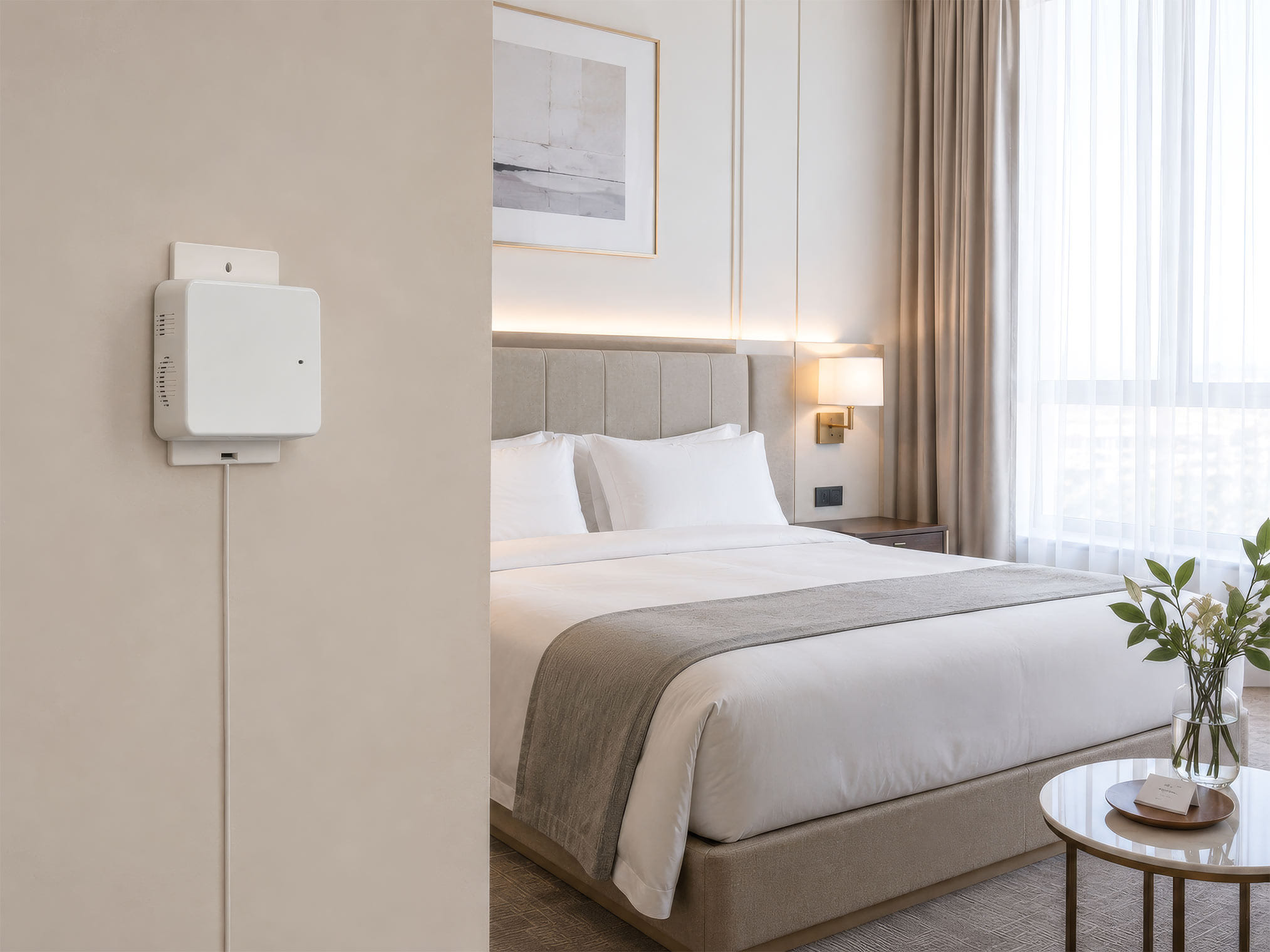
Rest Sensor is a discreet in-room device that trained technicians install in under five minutes per room. It connects to the hotel's standard Wi-Fi, needs no batteries or cartridge replacements and operates quietly in the background. The sensor has no camera or microphone, and its only job is monitoring the room's air quality.
Can hotel smoke detectors detect vaping?
A hotel's fire-safety smoke detector is a life-safety device built to warn of fire, and it is not designed to identify or document vaping. To identify vaping in guest rooms, many hotels add a dedicated air-quality sensor such as Rest Sensor, which monitors patterns associated with vaporized nicotine and marijuana and sends time-stamped alerts to the hotel's dashboard.
What should guests do if they have questions about a smoking charge?
Guests with questions about a smoking charge should contact the hotel directly, since each property sets its own policies, review process and resolution procedures. Most hotels provide a review or appeal process so information can be reassessed, and Rest supports the hotel's review by providing objective, time-stamped environmental documentation.
About Rest
Rest is a hospitality technology company built around one clear standard: when a stay is advertised as smoke-free, guests should experience it that way. Rest Sensor captures real-time air-quality signals and converts them into clear, time-stamped documentation that supports consistent handling across teams and properties, with decisions remaining hotel-led under existing policies. By reducing uncertainty in the moments that drive complaints and disputes, Rest helps hotels protect guest trust, keep operations moving, and uphold standards in a way that still feels like hospitality. For more information, visit https://www.restsensor.com/.
More Insights
Actionable guides, case studies, and industry analysis to help hospitality executives confidently enforce policies and optimize daily operations.